

 214-274-5008
Last Updated: October 25, 2026
Quick Summary
The Walls vs Brunt choice splits cleanly: Brunt is the newer, premium direct-to-consumer brand launched in 2020, while Walls is the legacy value play with decades of proven durability. Brunt wins on modern fit and brand appeal, Walls wins on price and longevity, so pick based on how hard you actually work.
- Brunt launched in 2020 and grew to more than $300 million in annual sales, per The Wall Street Journal.
- Walls apparel tends to fit loosely compared with Carhartt and is described as comfortable off the rack.
- Inspect bar tacks at pocket corners, belt loops, and fly openings before judging durability.
- Cost per wear divides purchase price by the number of wears before the item fails.
- Buy one piece from each brand first, wear it through the return window, then commit.
Table of Contents
- Walls vs Brunt Workwear at a Glance
- BRUNT Workwear Review: What You're Actually Paying For
- Walls Workwear Review: The Legacy Value Play
- Workwear Durability Comparison: Construction and Materials
- Workwear Fit and Sizing Comparison: Which Brand Fits You
- Cost Per Wear and Warranty: The Real Value Math
- Which Brand Fits Your Worksite
- Building Your Workwear Rotation with Hellanbach
- Frequently Asked Questions
Walls vs Brunt Workwear at a Glance
Here's the short version. Brunt wins on brand energy and modern fit. Walls wins on price and proven longevity.
Below, we break down construction, fit, cost per wear, and which brand suits which worksite. We'll also show you where a third option fits into a sensible rotation.
At Hellanbach, we watch this category closely because our customers live in their gear, not just pose in it.
| Factor | Brunt | Walls |
|---|---|---|
| Brand age | Launched 2020 | Legacy workwear brand |
| Positioning | Premium, direct-to-consumer | Value, widely available |
| Strength | Modern fit, brand appeal | Price, proven durability |
| Weakness | Higher cost, newer track record | Looser fit, less style |
| Best for | Brand-conscious buyers | Budget-focused tradespeople |
BRUNT Workwear Review: What You're Actually Paying For
Brunt sells footwear and clothing to tradespeople, and it has built a loyal following fast. The pitch is simple: work gear that looks sharp and performs. The catch is that you're paying for that positioning.
A common criticism, raised in a widely shared video review of Brunt's boot marketing, is that Brunt ads compare its boots to pairs costing several hundred dollars and imply similar performance.
Pros:
- Modern, less boxy fit than legacy workwear
- Strong brand identity that resonates with younger trades
- Growing product range across boots and apparel
Cons:
- Higher price point than value brands
- Short track record compared to legacy labels
- Marketing claims deserve scrutiny
What most reviews miss: Brunt's real strength is fit and feel out of the box. If you hate breaking in stiff gear, that matters.
Walls Workwear Review: The Legacy Value Play
Walls is the opposite story. According to All Seasons Uniforms' brand comparison of Carhartt and Walls, Walls apparel tends to fit loosely compared with Carhartt and is described as comfortable off the rack.
That loose fit is the dividing line. Some tradespeople love the room to move. Others find it sloppy. If you're between sizes or prefer a trimmer cut, try before you commit.
Pros:
- Lower price, easy to find on sale
- Proven durability across decades of use
- Roomy, comfortable fit for layering
Cons:
- Looser cut that won't suit everyone
- Less style-forward than newer brands
- Fewer modern fit options
The thing nobody tells you about Walls: the value isn't just the sticker price. It's that a cheaper shirt you replace less often beats a premium one you baby.
Workwear Durability Comparison: Construction and Materials
Durability is where the Walls vs Brunt workwear comparison gets interesting, because both brands talk a big game and neither publishes standardized abrasion data.
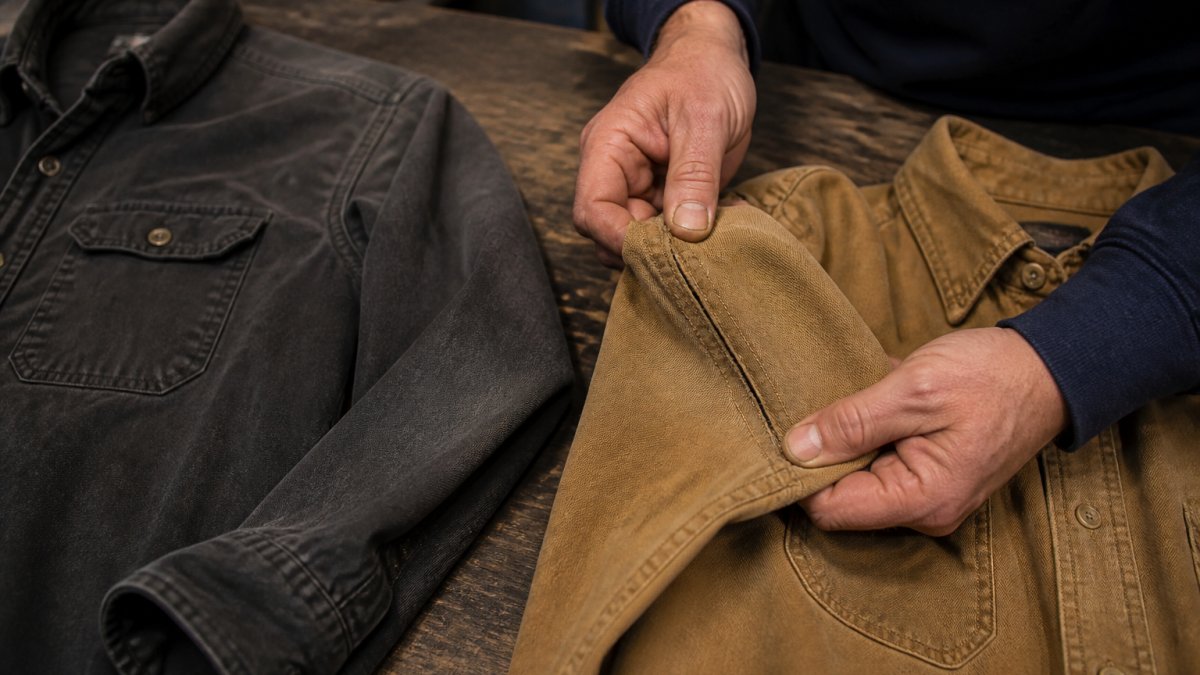
What to inspect, in order of importance:
- Stress-point reinforcement. Look for bar tacks at pocket corners, belt loops, and fly openings. A single row of stitching at a pocket mouth is the first thing to blow out. Two rows plus a bar tack is the minimum for hard use.
- Seam type. Flat-felled or double-needle seams resist abrasion better than single-needle seams. Turn the garment inside out and check the crotch, seat, and underarm seams, which take the most load.
- Fabric weight and weave. Heavier fabric is not automatically tougher. A tight weave with a higher thread count resists abrasion better than a loose, heavy weave that snags. Canvas and twill behave differently: canvas is stiffer and more abrasion-resistant; twill drapes better and breaks in faster.
- Hardware. Metal zippers and riveted buttons outlast plastic. Check that zipper tape is stitched, not glued, and that buttons are anchored with cross-stitching.
- Sole construction on boots. Look for a Goodyear welt or direct-attach sole rather than a glued sole. Glued soles are the most common separation failure on work boots, and they are the hardest to repair.
The failure points that show up first, by product type:
- Work shirts: elbow abrasion, cuff fraying, pocket-mouth tearing, and seam failure at the shoulder yoke.
- Work pants: crotch blowout, knee abrasion, and pocket-bag tearing. Reinforced knees and gusseted crotches are the two features that most extend life.
- Boots: sole separation, toe-cap wear, and lining breakdown at the heel. Welted soles can be resoled; glued soles usually cannot.
How the two brands approach it. Walls leans on proven, heavier fabrics and traditional construction that holds up to repeated washing. Brunt leans on modern materials and fit engineering, with more attention to how the garment moves. In practice, both handle farm work and construction work fine.
Workwear Fit and Sizing Comparison: Which Brand Fits You
Fit is the deciding factor for most buyers, and the two brands sit at opposite ends. Walls runs loose and forgiving. Brunt runs closer to modern street sizing. If you've been burned ordering online, this is where to slow down.
A practical approach:
- Measure your chest and waist, not your old shirt
- Check each brand's size chart separately, never assume consistency
- Buy one piece first before committing to a full set
- Read reviews that mention height and weight
If you're coming from a boxy legacy brand, expect Brunt to feel snugger and Walls to feel familiar. Neither is wrong. They just fit different bodies.
Cost Per Wear and Warranty: The Real Value Math
Cost per wear is the only price comparison that matters, and it is the angle most Walls vs Brunt write-ups skip.
Cost per wear formula: Divide the purchase price by the number of times you will realistically wear the item before it fails.
Example: a shirt you wear twice a week for two years gets roughly 200 wears. Divide the price by 200. That number, not the sticker, tells you the real cost.
Run it side by side. Take a value-priced shirt and a premium shirt and apply the same wear assumption.
What to check on price and availability:
- Current price at the source. Prices move with sales and seasonal markdowns, so check the brand's own site and a major retailer before you compare. Do not rely on a price you saw months ago.
- Shipping and returns. Free shipping and free returns lower your real cost, especially on a first order where fit is uncertain. A restocking fee or a customer-paid return label can erase the savings on a cheaper item.
- Sale cycles. Value brands tend to discount deeply and often; premium direct-to-consumer brands tend to discount less and rely on bundles. Time your purchase to the cycle that fits your budget.
Warranty and returns, what to verify:
- What is covered. Look for defects in materials and workmanship, and check whether normal wear is excluded. Most workwear warranties exclude wear from actual work, which is the failure mode you care about most.
- How long the window is. A 30-day return window is a fit guarantee, not a durability guarantee. A one-year defect warranty covers manufacturing failures but not abrasion.
- What you need to claim it. Keep the receipt and the order confirmation. Some brands require proof of purchase and a photo of the defect.
- Who pays return shipping. This is the line item that most changes the real cost of a first order.
A practical buying sequence. Buy one piece from each brand first, wear it through the return window, and only then commit to a full set. That sequence costs you a little time but protects you from the most expensive mistake in workwear: a full wardrobe that does not fit or does not last.
Which Brand Fits Your Worksite
Match the brand to the job, not the other way around. Here's a quick decision guide.
Choose Brunt if: you want modern fit, you value brand identity, and you're willing to pay for it.
Choose Walls if: you want proven value, you prefer a roomier cut, and budget drives the decision.
Choose neither if: you need a specific feature neither brand nails, like industrial-laundering durability or a particular pocket layout.
The honest answer: for most tradespeople, the best workwear is a rotation, not one brand. Mix pieces based on the task.
Building Your Workwear Rotation with Hellanbach
A smart rotation covers three jobs: heavy work, light work, and everything between. That's where Hellanbach fits. Our work shirts are built for people who actually get dirty, with details that survive real wear.
If you want a rugged shirt that holds up to industrial laundering, start with the Built Fast Work Shirt.

Every order comes with encrypted checkout and our 100% satisfaction guarantee. New insiders get 10% off their first order.
Frequently Asked Questions
Is BRUNT workwear actually good?
BRUNT built its reputation on work boots and expanded into apparel, and the company reported more than $300 million in annual sales according to The Wall Street Journal. That volume suggests real adoption among tradespeople. Reviewers have pushed back on some marketing comparisons against boots priced at $300 to $500, so judge the gear on construction and fit rather than ad claims. Try a single piece before committing to a full wardrobe.
How does Walls workwear compare with BRUNT?
The two brands sit at different points on the market. Walls is a long-running label known for value pricing and a looser cut, which a workwear retailer notes fits differently than Carhartt. BRUNT positions itself around trades-focused design and has grown fast since launching in 2020. For a Walls vs Brunt decision, weigh how much you want to spend per piece against how hard you wear your gear and how often you replace it.
Which brand offers a better fit, Walls or BRUNT?
Fit is the hardest thing to judge online, and the two brands cut differently. Walls apparel tends to run loose off the rack, which suits layering and a roomier feel. BRUNT designs around trades use, so check the size chart for each specific item rather than assuming one number carries across the line. Order one piece first, wear it through a full shift, and size the rest of your rotation from there.
How durable is BRUNT workwear compared with Walls?
Neither brand publishes standardized abrasion or wear-test results, so durability claims rest on construction details and user reports. Look at stitch density, bar tacking at stress points, seam reinforcement, and fabric weight when you compare. Walls has decades of field use behind it and a reputation for holding up at its price. BRUNT's newer gear is built for trades but has a shorter track record. Inspect the specific item you plan to buy.
What should you compare when choosing between Walls and BRUNT workwear?
Start with the job, not the logo. Match fabric weight and breathability to your conditions, check pocket layout for the tools you carry, and confirm the fit works with the layers you wear. Then run the cost per wear math: divide price by the seasons you realistically expect the piece to last. A cheaper shirt replaced twice can cost more than one that lasts. Read customer reviews for the exact item, not the brand overall.
The Walls vs Brunt workwear comparison has no single winner. Brunt sells modern fit and brand energy. Walls sells proven value. If you want gear that blends durability with a fit that works, Hellanbach builds work shirts with industrial-laundering construction, fade-resistant fabric, and reinforced pockets. Get started with Hellanbach and build a rotation that holds up to the job.